
Gauteng Moves to Regulate Online Betting — Here's What It Means for South African Players
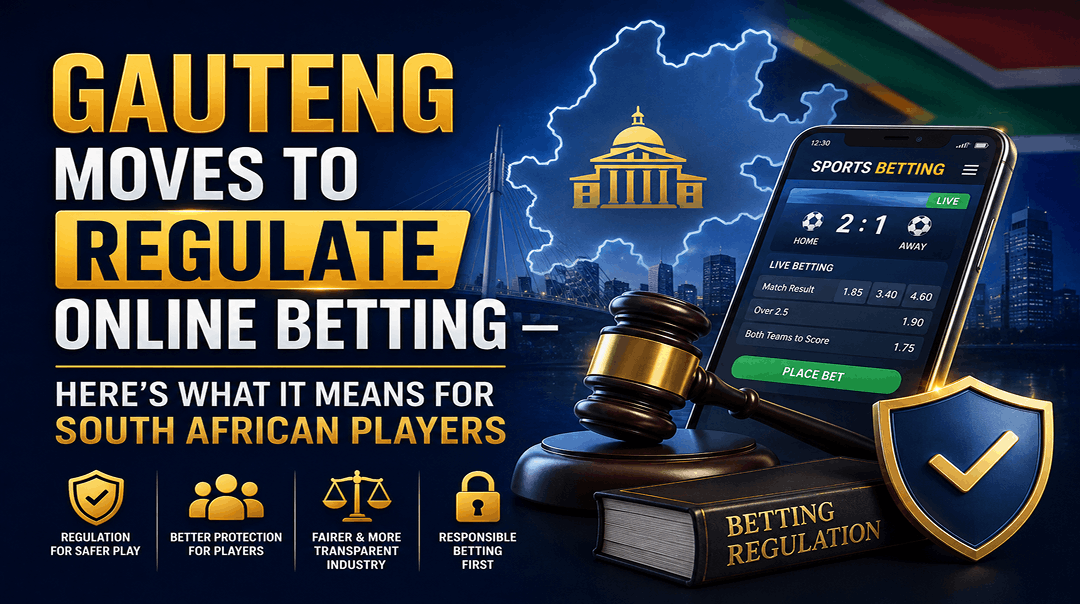
Gauteng has signalled a significant shift in how it plans to approach online betting regulation, with Finance MEC Lebogang Maile confirming in the province’s 2026/27 Budget Speech that the Gauteng Gambling Bill is being amended to bring online betting under a more formal provincial framework.
For South African players, it’s a development worth understanding — even if the immediate impact won’t be felt overnight.
The Problem Gauteng Is Trying to Solve
The province has acknowledged that without a dedicated provincial licensing structure for online betting, it lost out on substantial revenue between 2019 and 2025. More importantly, the absence of a clear framework has allowed a murky mix of licensed operators, offshore platforms, and unregulated sites to compete in the same space with very little to distinguish them from a player’s perspective.
The Gauteng Gambling Board — the statutory body responsible for regulating gambling activity in the province — has been laying the groundwork for some time. Its 2023/24 Annual Report noted progress on both a Gambling Amendment Bill and a Gambling Tax Bill, with the stated goal of improving oversight and creating a fairer, more competitive gambling environment.
What the Reforms Actually Cover
It’s important to be clear about scope. This is not legalisation of online casino gaming. Fixed-odds bets on casino-style games such as roulette remain unlawful under the Gauteng Gambling Act — a position confirmed by the Supreme Court of Appeal. The reforms are focused on online sports betting and similar wagering activity, with an emphasis on licensing, compliance monitoring, and responsible gambling controls.
The proposed changes include automated responsible gambling interventions — a meaningful step for an industry that has often been criticised for treating player protection as an afterthought.
The Wider Regulatory Picture
Gauteng’s push sits within a broader national conversation. In November 2025, National Treasury published a draft discussion paper on online gambling taxation, acknowledging the sector’s significant growth while flagging concerns around problem gambling and social harm. The National Gambling Board has also continued to draw a firm line between legal online betting and unlawful interactive casino-style gambling.
Taken together, it’s clear that South African authorities are actively working through how to regulate, tax, and monitor the online gambling sector rather than leaving it to develop unchecked.
What This Means for Players Right Now
In practical terms, stronger regulation should make it easier to identify which platforms are properly licensed and which ones are operating without adequate oversight. That matters in a market where offshore operators frequently target South African players with little accountability.
For now, the guidance remains the same: look for operators with verifiable local licences, understand what types of gambling are legally permitted, and use the responsible gambling tools available to you. If Gauteng’s reforms deliver on their promise, that landscape should become considerably clearer in the years ahead.