
Choosing the Right Banking Method (SA-friendly options)
Different payment methods suit different players. Some people want privacy and simple deposits. Others want faster withdrawals or bigger limits. Below are the four methods we cover in detail on our site.
Voucher
Vouchers are a solid option if you want a straightforward deposit without using a bank card directly on the casino. Many players like vouchers because they help with budgeting. You can only deposit what you’ve purchased.
Best for quick, controlled deposits, for players who prefer not to share bank/card details with the casino and for keeping gambling spend separate from everyday banking
Read the full Voucher banking guide (how it works, how to deposit, common voucher errors, and safety tips).
Capitec Pay
Capitec is widely used in South Africa, and Capitec Pay-style payments appeal because they feel familiar and easy. The exact deposit flow can vary per casino, but the key is always to follow the steps carefully and ensure your details match your casino profile.
Best for a familiar, SA banking experience and players who want convenience without extra accounts.
Pro tip: Always double-check the reference and your name details. Small mismatches can cause big delays later.
Read the full Capitec Pay guide (deposit steps, what to check before paying, and troubleshooting).
Bank Transfer (EFT)
Bank transfers (often referred to as EFT) arethe “traditional” route. They can be great for larger amounts and for players who prefer direct banking, but they may take longer, and you often need to keep proof of payment and use the correct reference.
Best for larger deposits/withdrawals and for players who want a more direct bank-to-casino route. Note that bank transfers require more admin than instant methods and there may be longer timelines, depending on processing windows
Read the full Bank Transfer guide (how to do it properly, expected timelines, and how to avoid payout delays).
Skrill
Skrill is an e-wallet option that many players use for smoother casino banking once it’s set up. One of the biggest benefits is separation. Your casino payments can sit in Skrill instead of mixing with your daily bank account. It can also be a strong option for players who deposit and withdraw more regularly.
Best for quicker cash-outs (often, once the casino approves), frequent play and flexible money management and keeping casino spending separate.
Just remember that e-wallets work best when your account is verified and your details match your casino profile.
Read the full Skrill guide (setup, verification, fees, and best practices).

Get up to R15,000 + 450 Bonus Spins


100% up to R5,000


50 Free Spins on Big Blue Fishing
200% match bonus up to R2000


R25 Free Bet On Sign Up



50 Habanero Bonus Spins & R50 When You Sign Up


100% bonus up to R3,000


30 Free Spins On Sign-Up
R35,000 Match Bonuses Over 3 Deposits.

20 Free Spins + R25 Free Sports Bet
Up to R30,000 across 5 deposits

R50 Sign Up Bonus plus 25 Free Spins On Sign-Up
1,500 to R5,000


100% Match Up To R3,000 + 50 Free Spins
1,400+ Games & 800+ Slots



100% Deposit Match Up to R3,000
100% Welcome Bonus Up to R3,000

100% to R5,000 + 250 free spins + R25 bonus bet
23 Sports Categories, 700+ Casino Games

250% Welcome Bonus up to R5,000
250% to R5,000 + 50 FS (BZC exclusive)

100% Welcome Bonus up to R5,000
100% to R5,000 + 50 Free Spins
How Casino Banking Actually Works
If you’ve never banked at an online casino before, the biggest thing to understand is this: casino banking isn’t the same as normal online shopping. When you buy something online, the payment is final and that’s the end of it. With a casino, money moves through a few extra steps because they have to make sure:
- The account belongs to a real person.
- The money coming in is legitimate.
- The money going out is sent to the correct person (you).
- No one is attempting to abuse the system using stolen cards, chargebacks, or fake accounts.
That’s why deposits feel quick and easy, but withdrawals can feel like “admin”. It’s not always fun, but it is common, and once you understand the process, you can avoid most of the delays that catch beginners out.
Deposits: why they usually feel simple
Depositing is normally the easy part: you choose a method, enter an amount, confirm, and your casino balance updates. Depending on the method, it can be instant (like vouchers or e-wallets) or take a little longer (like some bank transfers).
When your deposit goes through, the casino credits your account balance. That balance might show as:
- Real balance / cash balance: Money you can use immediately.
- Bonus balance: If you claimed a bonus, some funds might sit separately.
- Pending: Rare for most methods, but can happen if a payment needs extra confirmation.
Pro tip : If you’re offered a bonus, don’t just click “yes” automatically. Bonuses can come with rules (like wagering) that affect when you can withdraw. It’s not “bad”, it’s just something you should know upfront.
Withdrawals: why people get stuck here
Withdrawals are where most players get stuck, not because it’s “dodgy”, but because casinos have to follow security and compliance processes.
Here’s the honest truth: the casino is more careful when money leaves their system than when money comes in. That’s normal for financial systems. They want to make sure the withdrawal isn’t going to a different person, linked to a fraudulent account or that someone is trying to dodge rules around bonuses or verification.
So, while deposits are mostly “click and go”, withdrawals are more like “request, approve, then pay”.
A typical journey (what happens step-by-step)
This is the path your money follows from deposit to payout:
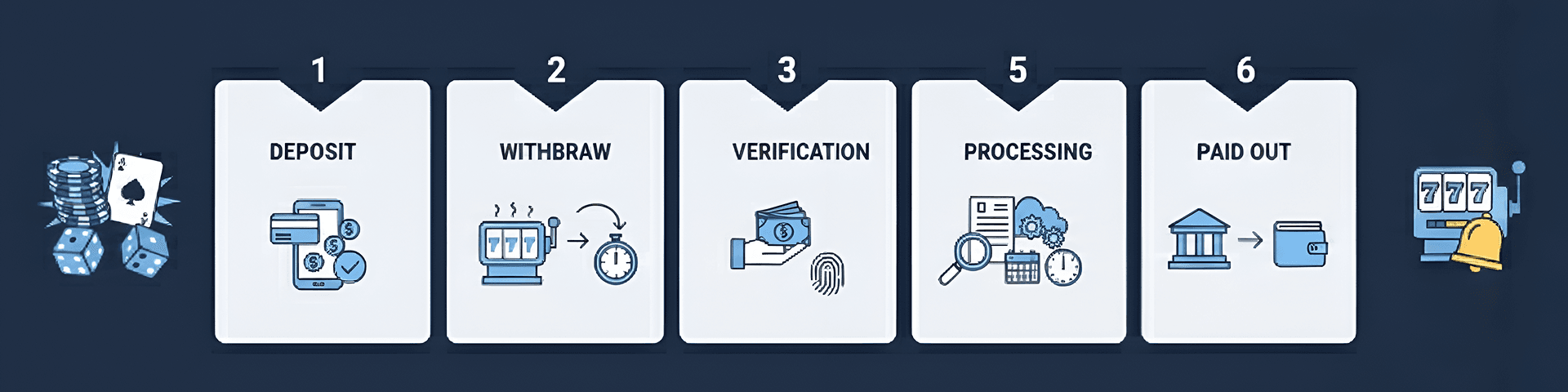
1) Deposit (what’s happening behind the scenes)
When you deposit, your payment method (voucher, Capitec Pay, bank transfer, Skrill) confirms the transaction and the casino updates your balance.
Start with a smaller amount to test the process. Use your own details from day one (name and payment method should match your casino account). Be sure to save proof of payment (POP), especially for EFTs or vouchers.
If a deposit fails, it’s usually because you’ve either you entered something wrong (reference, code, details), your bank/provider blocked it, the casino doesn’t support that method for your account or region or you a daily limit.
2) Play (and why this affects withdrawals)
Once the funds are in, you can play. But how you play can affect how quickly you can withdraw. If you accepted a bonus, you may need to meet wagering requirements before you can cash out winnings linked to it.
Also, rapid deposits followed by an immediate withdrawal request can trigger extra checks because that pattern sometimes matches fraud behaviour.
It doesn’t mean you’ve done anything wrong — it just explains why some players get asked for verification “out of nowhere”.
3) Withdraw (what you’re actually doing when you “cash out”)
Withdrawing isn’t instant payment, it’s a request you send to the casino. That request moves through a few standard statuses:
- Pending: Waiting for review.
- Processing: The casino is approving or initiating the payment.
- Paid / Completed: The casino has sent the payout.
- Rejected: Something needs fixing, such as verification issues, a payment method mismatch, or bonus rule restrictions.
The biggest beginner mistake is thinking “Processing” means the bank already sent it. Most of the time it means the casino is still busy approving and releasing it.
4) Verification / checks (what they’ll ask and why)
Many casinos only do full verification when you withdraw — especially on your first cash-out or with larger amounts. They’re confirming you’re real and that the payment method belongs to you. Expect requests for ID, proof of address, and sometimes proof you own the payment method.
If your casino account name doesn’t match your banking/e-wallet details, or you try to withdraw using a different method than you deposited with, delays are common. The easiest win is to complete verification early, before you urgently need a payout.
5) Processing (casino approval time vs “money in your hand” time)
This is the stage that causes the most stress because it feels like nothing is happening. Casinos often process withdrawals in batches or within certain hours, and they may do extra checks on weekends/public holidays or for higher amounts. During processing, they’re confirming your balance is eligible, your documents are approved, any bonus rules are satisfied, and the withdrawal method is correct and in your name.
Once that’s all cleared, the casino releases the payout to your chosen method.
6) Paid out (your bank/provider finishes the job)
Even after the casino marks it as “Paid”, the money still has to move through the provider’s system. That’s why Skrill can feel quicker once approved (it’s within an e-wallet network), while bank transfers (EFTs) can take longer because banks have their own processing timelines. Vouchers are usually deposit-only, so they generally won’t be the method you use to receive withdrawals.
So if you’re waiting at this stage, it’s often not the casino delaying you; it’s simply the provider’s timeline.
The Legal Side of SA Casino Banking
South Africa’s online gambling space can be confusing because there are different types of operators and different rules depending on where a casino is based. On top of that, banks and payment providers may have their own policies around gambling transactions, which can affect whether a payment goes through smoothly.
What you should take from this, practically:
- Always play 18+ and only use payment methods in your own name.
- Expect verification (KYC) before you get paid — this is standard practice.
- Stick to casinos that are clear about their rules, including withdrawal times, verification requirements, fees, and limits.
If you’re ever unsure about what a casino is asking for (or whether a payment option is safe), our banking pages on this site are designed to be the “no panic” place you check before you do anything.
Understand KYC Verification and Its Importance
Most delays happen for one of two reasons: (1) the casino hasn’t finished verifying you, or (2) the deposit and withdrawal details don’t match properly. In other words, the casino either still needs to confirm who you are, or something about your banking info doesn’t line up with your casino profile.
You’ll often hear this called KYC. It sounds technical, but it’s simply identity checks. It’s the casino making sure the account belongs to a real person and that payouts are going to the rightful owner.
Usually they’ll request:
- ID: South African ID book/card or passport.
- Proof of address: Usually a recent utility bill or bank statement.
- Proof of payment method: Required depending on how you deposited.
A big rule that saves you pain later: bank and withdraw using the same details. Your casino profile name should match your documents, and your deposit method should match the payout method wherever possible.
If you deposit from one name and try to withdraw to another, or you use someone else’s account “just this once,” you’re basically inviting delays, extra document requests, and sometimes a rejected withdrawal until everything is corrected.
Also, don’t be surprised if a casino asks you to withdraw via the same method you deposited with. This is standard at many sites because it helps prevent money laundering and chargeback scams (like someone depositing with a card and trying to withdraw to a different account). If you keep your details consistent and complete verification early, you’ll usually have a much smoother payout experience.
Understanding Fees, Limits and Timing
A lot of players only look at deposit speed, but the smarter move is to check the full banking picture, because quick deposits don’t always mean quick or easy withdrawals later.
Here’s what to look at before you fund your account:
- Minimum deposit:Some payment methods suit small top-ups, while others are better for larger amounts. Lower minimums are useful for new players who want to test the process without committing too much money.
- Minimum withdrawal: Casinos often don’t process very small payouts. If the minimum withdrawal is higher than expected, you may need to play longer or deposit more before you can cash out.
For example, if a casino has a minimum withdrawal of R500, and you’re sitting on R300, you might have to play a bit longer before you can cash out. Same with minimum deposits. If you’re just testing a new site, a R100–R200 top-up feels safer than jumping in big.
- Fees:
One side might be “free” while the other isn’t. A casino may charge no fees while your payment provider does, or vice versa. Always check both sides, especially if you make frequent withdrawals. -
Processing time:Deposits are often instant, but withdrawals usually involve two timelines.
- Casino approval time: The casino reviews and releases the payout.
- Provider or bank time: The payment provider or bank delivers the funds once they are sent.
So, a casino might say “withdrawals processed in 24 hours”, but your bank transfer could still take longer after that. It’s not always one single clock.
It’s also worth checking a couple of “small print” items that directly affect banking:
- Method matching: Many casinos require you to withdraw using the same method you deposited with, or they may request additional checks.
- Limits per method: Some payment options have lower maximum cash-out limits than others.
- Weekend or holiday delays: Certain casinos only review withdrawals during specific hours or business days, which can cause delays.
If a casino is vague about any of this, or hides it in confusing wording, that’s a warning sign. A decent casino banking page should tell you minimums, fees, and realistic payout timing in plain terms, so you know exactly what you’re signing up for.
Safe Banking Tips at Online Casinos in South Africa
Online casino banking can be very safe, if you treat it like online banking, not like a casual app. Most problems happen when players rush, use the wrong details, or trust the wrong “helpers”. If you only do a few things right, do these:
- Only deposit on a secure site:
Look for HTTPS and the padlock in the browser. Avoid sites that look suspicious, keep redirecting, or come from random messages—use the official URL instead.
- Never share OTPs, PINs, passwords, or verification codes:
Not with support, VIP managers, or anyone else. A real casino will never ask for your OTP. Be cautious of SIM-swap and OTP scams.
- Avoid agents or third parties:
Don’t let anyone deposit or withdraw on your behalf, as this risks account blocks, failed withdrawals, and scams.
- Use strong passwords and 2FA:
Use unique passwords for your casino account (different from email) and enable two-factor authentication where available.
- Don’t bank on public Wi-Fi:
Use mobile data instead of public Wi-Fi to make payments safely and reliably.
- Keep proof of important transactions:
Save screenshots or receipts for transfers and vouchers. Reference numbers and timestamps help speed up support if issues arise.
A few extra “smart habits” that help in South Africa:
- Keep your casino profile details accurate: Ensure your name, surname, and address are correct. Small mismatches can cause delays later.
- Don’t let anyone remote in to your device: Avoid allowing others to access your phone or laptop for banking, as this is a common way scammers take over accounts.
Red flags to watch for (walk away immediately)
- Anyone asking you to “pay a fee to unlock your withdrawal” or “activate” a payout.
- A support contact pushing you to move money via WhatsApp, a personal bank account, or a random link.
- Pressure tactics like “deposit again to get paid quicker” or “one more deposit to verify”.
- Someone claiming they can guarantee withdrawals if you pay them first.
Real casinos don’t need you to do sketchy stuff to get your own money. If anything feels off, stop, don’t pay again, and rather check the banking rules (or our method guides) before you do the next step.
Final Word: Bank Smarter, Get Paid Faster
Most casino banking issues are avoidable when you know what to expect and you set things up correctly from the start. Use your own details, complete verification early, and choose a method that matches your needs (not just what looks quickest on the deposit screen).
For the step-by-step instructions, screenshots, troubleshooting, and “what to do if it goes wrong”, use the detailed banking guides on our site. They’re built specifically for South African players and they’ll save you time and frustration.
FAQs
For most beginners, vouchers and Capitec Pay-style payments are the simplest because they’re straightforward and don’t require much setup. If you want long-term convenience and faster cash-outs, Skrill can be great once your account is verified.
Deposits are usually automated. Withdrawals need extra checks — especially first-time or large withdrawals — to confirm your identity and prevent fraud. So you’re dealing with casino approval time plus bank/provider processing time.
It depends on the casino and method. A withdrawal can be delayed by verification, casino processing windows, and your provider’s timeline. E-wallets like Skrill often feel faster after approval, while EFT/bank transfers can take longer due to bank processing and cut-off times.
- Pending: The casino hasn’t reviewed or approved it yet.
- Processing: The casino is busy approving and releasing the payout.
- Paid / Completed: The casino sent it (your provider or bank may still take time).
- Rejected: Something needs fixing, usually due to verification issues, method mismatch, or bonus rules.
KYC is identity verification. Casinos use it to confirm you’re a real person and to protect payouts. It typically includes ID, proof of address, and sometimes proof of payment method.
SA ID book/card or passport, proof of address (often a recent utility bill or bank statement) and proof of payment method (depends on how you deposited).
Sometimes, but many casinos prefer (or require) you to withdraw via the same method you deposited with. If you change methods, expect extra checks — and in some cases, the casino may reject the request until you use the original method.
A deposit can fail if the voucher code/reference was entered incorrectly, your bank or payment provider blocked the transaction, the casino doesn’t support that method for your account or region, or you’ve hit a daily limit. If it keeps happening, double-check the details and try a different method (for example, voucher, Skrill, or EFT).
Usually it’s because your KYC isn’t completed yet, your account and payment details don’t match, bonus wagering isn’t finished, the casino is processing withdrawals in set payout windows (often slower on weekends/public holidays), or your bank/provider is still processing the payment after the casino has approved it.
Some do and some don’t. Even if the casino charges nothing, your bank or payment provider might (or vice versa), so always check the deposit and withdrawal fees, any currency conversion costs (where applicable), and the minimum withdrawal limits.
Use a secure site (HTTPS), keep your login private, enable 2FA if available, and only use payment methods in your own name. Avoid third-party “agents” and never share OTPs or verification codes.
Vouchers can be very safe for deposits because you’re not sharing card details directly with the casino. Just buy vouchers from trusted sources and keep receipts/codes secure.
Skrill is widely used as an e-wallet option. It’s generally best when your account is fully verified and your casino profile details match your Skrill account details.
A Proof of Payment (POP) helps confirm the deposit came from you and matches the transaction reference. It’s especially useful for EFT/bank transfer deposits and sometimes voucher issues.
It’s strongly not recommended. Using someone else’s account commonly leads to verification delays, rejected withdrawals, or account restrictions because the casino needs the payment method to match the account holder.
Often, yes. Many casinos review withdrawals in batches or during certain hours, and banks/providers can also process slower around weekends and public holidays.
Big red flags include anyone asking you to “pay a fee to unlock your withdrawal”, pushing you to pay via WhatsApp or personal accounts, pressuring you to “deposit again to get paid faster”, or asking for your OTP, PIN, or password. If any of these happen, stop and don’t send more money.
They can. Some bonuses require wagering before you can withdraw, and some have max cash-out limits. Always check bonus terms before accepting.