
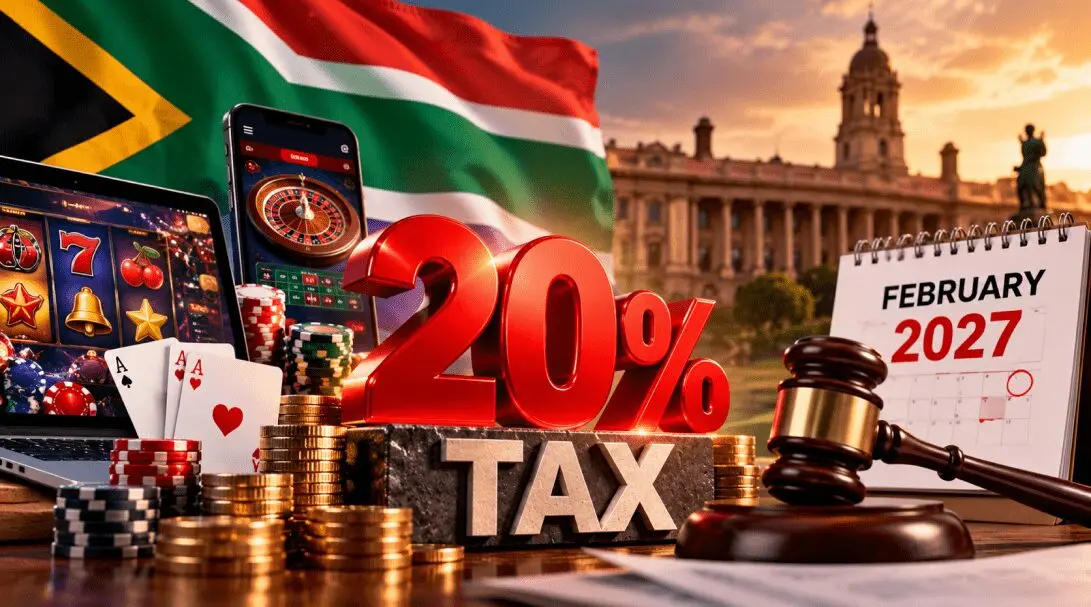
SA's 20% Online Gambling Tax: Still Alive, But No Decision Until February 2027
If you were hoping for a clear answer on South Africa’s proposed 20% online gambling tax this week, we’ve got some news: you’ll have to wait a little longer.
Finance Minister Enoch Godongwana delivered his Medium-Term Budget Policy Statement, better known as the mini-budget, in Parliament on Wednesday, 21 October. The gambling tax got a brief mention. The short version? It’s not dead, it’s not confirmed, and the final details will only land in the February 2027 Budget.
Below everything you need to know.
Explore the Latest Review Promotions

Get up to R15,000 + 450 Bonus Spins


100% up to R5,000


50 Free Spins on Big Blue Fishing
200% match bonus up to R2000


R25 Free Bet On Sign Up



50 Habanero Bonus Spins & R50 When You Sign Up


100% bonus up to R3,000


30 Free Spins On Sign-Up
R35,000 Match Bonuses Over 3 Deposits.

20 Free Spins + R25 Free Sports Bet
Up to R30,000 across 5 deposits

R50 Sign Up Bonus plus 25 Free Spins On Sign-Up
1,500 to R5,000


100% Match Up To R3,000 + 50 Free Spins
1,400+ Games & 800+ Slots

100% Deposit Match Up to R3,000
100% Welcome Bonus Up to R3,000

100% to R5,000 + 250 free spins + R25 bonus bet
23 Sports Categories, 700+ Casino Games

250% Welcome Bonus up to R5,000
250% to R5,000 + 50 FS (BZC exclusive)

100% Welcome Bonus up to R5,000
100% to R5,000 + 50 Free Spins
The quick version
- No rate was announced. The 20% figure is still just a proposal.
- Treasury will reveal the final design of the tax in February 2027.
- The tax would be paid by operators, not taken off your winnings.
- Nothing changes for punters right now.
So, what did Godongwana actually say?
Not a lot, to be honest. The gambling tax got just four sentences in a long speech. But those four sentences told us two important things.
First, the idea of a national gambling tax has survived the public consultation. According to the minister, most of the submissions Treasury received agreed that the explosive growth of online gambling, and the harm that comes with it, needs to be dealt with.
Second, the details are still up for grabs. Treasury is still working out how the tax would be designed, how it fits with current gambling regulations, and how it would affect the provinces and the operators who are already licensed. His one firm promise was that the final design will be announced in the February 2027 Budget.
So the rate, exactly what gets taxed, and when it would kick in are all still open questions.
Wait, remind me what this 20% tax is?
Back in November 2025, National Treasury put out a discussion paper proposing a brand-new 20% national tax on online gambling. It would apply to the gross gambling revenue (GGR) of online betting and interactive gambling operators, on top of the taxes the provinces already charge.
In plain English, GGR is everything punters bet minus everything that gets paid back out in winnings. It’s basically what the bookie keeps before costs. Treasury reckons the tax could bring in more than R10 billion a year.
The public had until the end of February 2026 to have their say, and Treasury has been chewing over the feedback ever since.
Why does Treasury want it?
Treasury sees this as a sin tax, in the same family as the taxes on booze and cigarettes. The thinking is simple: problem gambling costs society, so the industry should help carry that cost.
And there’s no denying that online betting has boomed:
- Gross gambling revenue: Almost tripled, from R26.3 billion in 2015 to R74.5 billion in 2024.
- Total wagers: South Africans wagered around R1.5 trillion in 2024/25, up more than 31% on the year before.
- Registered bookmakers: The number jumped from 288 in 2020 to 402 in 2025.
It’s an easier sell politically, too. Several parties would much rather see gambling operators taxed than ordinary households hit with new taxes.
The bookies aren't happy
Unsurprisingly, licensed operators have pushed back hard. The South African Bookmakers’ Association (SABA) says its members already pay around 6.5% provincial tax on online betting plus 15% VAT, which works out to an effective rate of about 18% to 19%. Stack a 20% national tax on top, it argues, and the real burden could get close to 39%.
SABA’s biggest fear is that this would cost jobs and push punters towards illegal offshore sites, where nobody pays tax and players have zero protection.
Other concerns raised during the consultation include:
- Whether 20% is too high (or, for some, too low)
- The social and health impact of online gambling
- Legal and constitutional questions about national versus provincial powers
- How the tax would actually be enforced
That provincial question is a big one. Gambling in South Africa is licensed and taxed by the provinces, and online casino games still aren’t properly legalised at national level. Critics say it’s odd to slap a national tax on a market that national law hasn’t even sorted out yet. The fact that Godongwana specifically mentioned the provinces this week suggests Treasury knows it has homework to do here.
Then there’s Kenya, which often gets held up as a warning. When it introduced a 20% levy on stakes, some operators left the market and tax collections actually fell.
What does this mean for you as a punter?
Short answer: nothing changes today. Your account, your bonuses and your winnings are exactly as they were.
But here’s what’s worth keeping in mind:
- It’s not a tax on your winnings. The proposed tax is paid by the operator on its revenue. SARS isn’t going to start skimming 20% off your payouts.
- Your bonuses could feel it. If the tax goes ahead at or near 20%, industry watchers expect operators to cut back on promotions first. Think smaller welcome offers, stricter wagering requirements and fewer free bets.
- Stick to licensed sites. If legal operators get squeezed, dodgy offshore sites will try to fill the gap. They offer no protection and no way to get your money back if something goes wrong. Always check that a site holds a South African provincial licence before you sign up.
What happens next?
Here’s the road ahead:
- Now until January 2027: Treasury keeps talking to the industry, the provinces and other stakeholders.
- February 2027: Godongwana reveals the final design in the Budget. That could mean 20%, a different rate, or a different tax base altogether.
- After that: The tax would still need to go through draft legislation and Parliament, so don’t expect it to kick in overnight.
We’ll keep a close eye on this one and update you as soon as there’s more news.
18+ only. Gamble responsibly. If gambling stops being fun, the National Responsible Gambling Programme offers free, confidential support 24/7: call 0800 006 008 or WhatsApp 076 675 0710.